
Polyphenols: The Biochemistry Behind Plant Health

Updated: Mar 30
The role of flavonoids in nutrient uptake, plant metabolism, and crop quality.

Polyphenols are some of the most important compounds produced by plants. They are often associated with colour, flavour, and antioxidant properties in crops, but their role within plant physiology runs much deeper. Polyphenols sit at the centre of plant metabolism and influence how plants grow, respond to stress, and interact with their environment.
Within this broad family of compounds, flavonoids are one of the most significant groups. Thousands of flavonoids have been identified across plant species, where they function as metabolic regulators, antioxidants, and signalling molecules. They help coordinate key physiological processes, including hormone signalling, photosynthesis, and stomatal activity.
CropBioLife works within this natural chemistry. It is a foliar spray containing naturally occurring flavonoids derived from botanical sources. When applied to plant leaves, these compounds stimulate the plant’s biosynthetic pathways and improve the plant’s ability to uptake nutrients. Improved nutrient uptake strengthens overall plant health and allows the plant to operate its metabolic processes more efficiently.
Polyphenols and Plant Metabolism
Plant metabolism depends on a reliable supply of nutrients. These nutrients support everything from energy production in photosynthesis to the synthesis of structural and biochemical compounds.
When nutrient uptake improves, plants have greater access to the elements needed to sustain these processes. As metabolism strengthens, the plant can produce the compounds required to regulate growth, signalling, and cellular protection. Polyphenols are among the most important of these compounds.
Within plant tissues, polyphenols contribute to several essential functions. They act as antioxidants that protect plant cells, participate in signalling pathways that regulate plant development, and influence physiological responses to environmental conditions. Because they are closely tied to metabolic activity, healthy plants with efficient nutrient uptake are generally better able to synthesise these compounds.
The Role of Polyphenols in Crop Development
In many crops, polyphenols play a visible role in fruit development and quality. This relationship is particularly well understood in grapevines.
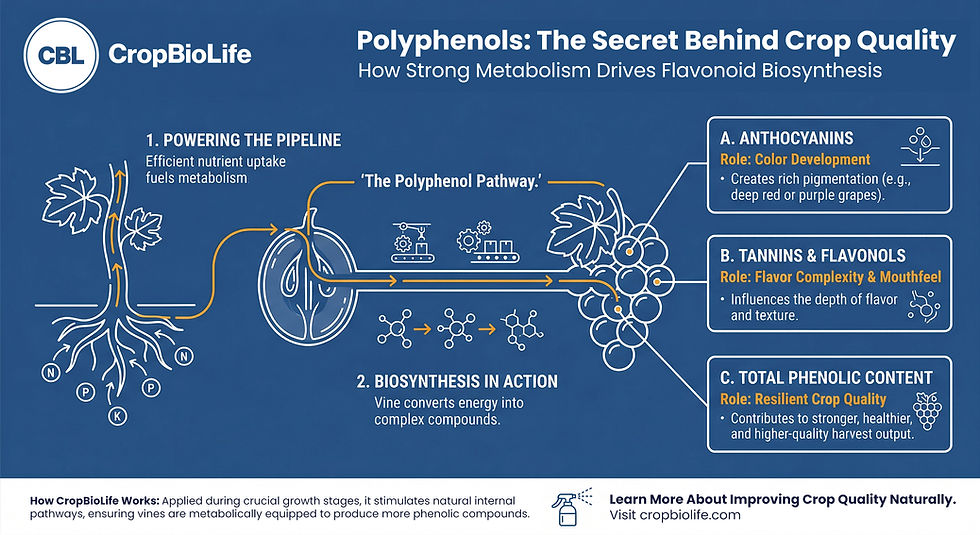
In grapes, the flavonoid biosynthetic pathway produces compounds such as anthocyanins, tannins, and flavonols. These polyphenols influence colour, flavour complexity, and mouthfeel in wine.
The accumulation of these compounds depends on the metabolic activity of the vine. When plant health is strong and nutrient uptake is functioning efficiently, vines are better able to sustain the biochemical pathways that produce these phenolic compounds during the ripening process.
Vineyard trials examining CropBioLife applications have measured increases in several phenolic compounds in grapes and wine when compared with untreated vines, including increases in tannins, anthocyanins, and total phenolic content. These observations are consistent with improved plant metabolism resulting from stronger nutrient uptake.
Polyphenols and the Plant–Soil Relationship
Plant metabolism not only influences what happens above the ground. It also affects activity within the soil surrounding the plant roots.
When photosynthesis and nutrient assimilation operate efficiently, plants produce greater amounts of carbohydrates and organic compounds. Some of this energy is transported to the roots and released into the soil as root exudates.
These exudates feed beneficial soil microorganisms, including mycorrhizal fungi that form symbiotic relationships with plant roots. These fungi help extend the plant’s reach within the soil and improve access to nutrients and water.
As soil biology strengthens, nutrient cycling improves, which further supports plant nutrition. In this way, improved nutrient uptake and plant metabolism help reinforce the natural relationship between plants and soil.
Supporting Natural Plant Biochemistry
Plants already produce polyphenols and flavonoids as part of their normal biological systems. However, the efficiency of these systems depends heavily on plant health and nutrient availability.
CropBioLife supports these natural processes by delivering flavonoids directly to the plant through foliar application. These compounds stimulate internal biosynthetic pathways and improve nutrient uptake.
When plants absorb nutrients more effectively, their metabolism becomes more efficient and they are better able to sustain the biochemical processes that drive growth and development. Polyphenols are one of the clearest indicators of this healthy metabolic activity.
Rather than forcing a response, CropBioLife works with the plant’s natural biochemistry. By supporting nutrient uptake, it helps plants maintain the metabolic balance required for healthy growth, productive crops, and resilient agricultural systems.
To learn more about how CropBioLife can support the natural processes of your crops, get in touch via cropbiolife.com/contact-us


Comments